
Keeping the right amount of air in your tires is one of the easiest ways to stay safe on the road. Proper pressure improves grip, saves fuel, and reduces tire wear.
According to the NHTSA, underinflation increases the risk of blowouts and flats, and yet many drivers skip a simple tire pressure check until a soft tire or slow leak forces them. Checking tire pressure is quick and takes only a few minutes.
This guide shows you how to check your tire pressure with or without a gauge, and how to read it on your dashboard via the TPMS display.
Let’s move on step by step.
How to check your tire pressure using a tire gauge
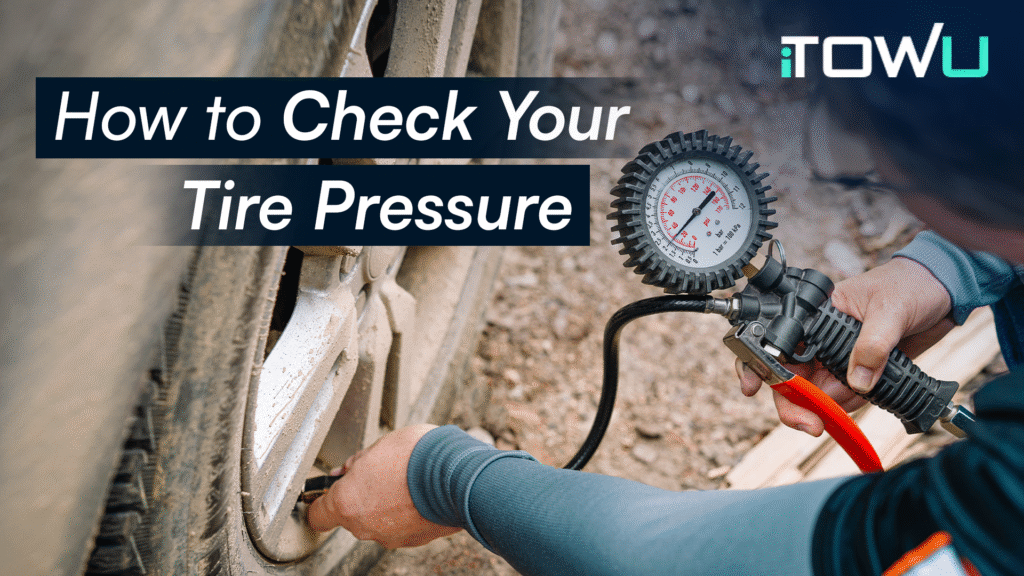
Using a tire gauge is the most accurate way to measure tire pressure. You can use a digital gauge or a small hand gauge; both work similarly.
Step 1: Park your car on flat ground and make sure the tires are cool. Hot tires can read higher because the air expands. The NHTSA recommends checking pressure when tires haven’t been driven for at least three hours.
Step 2: Remove the valve cap (keep it in your pocket or else you might lose it). Then, press the air pressure gauge onto the valve firmly and quickly. You may hear a brief hiss.
Step 3: Read the number on the gauge. The number tells you your current tire pressure.
Step 4: Check the sticker inside your car door for the recommended tire pressure. Many cars are in the 30–35 PSI range, but always follow your sticker.
- If your reading is lower than the sticker, add air.
- If it’s higher, let some air out.
Step 5: Put the cap back on when you are done. Repeat for all four tires, including the spare if your car has one.
Doing this simple check helps avoid bigger problems later. Just like checking battery voltage with a multimeter helps avoid car starting issues, a tire pressure check prevents driving problems.
How to check your tire pressure without a gauge
What if you don’t have a tire gauge? How would you check then?
If you don’t have a gauge, you can still approximate your tire pressure. It’s not exact, but it helps when you’re stuck.
- Look: Check the shape of the tires from the side. If the bottom looks flatter than usual, the pressure is likely low. A fuller, rounder shape is usually closer to the correct pressure.
- Press: Push the tire with your hand. It should feel firm; if it feels soft or pushes in easily, the pressure is low.
- Drive feel & sound: Roll slowly and listen. A low tire can make a flapping or heavy sound. If the steering feels heavy or the car pulls to one side, that tire may be low, too.
These signs can alert you to a problem, but they’re not a replacement for a gauge. Check with a real gauge as soon as you can.
Can you check the tire pressure from the dashboard?
Yes, but only if your car has a Tire Pressure Monitoring System (TPMS). Sensors inside the tires report real-time pressure to the dashboard. Look for a TPMS or Tire Pressure screen; some cars show individual PSI for each tire, while others only display a warning light. If you see PSI numbers, you can rely on those more than the warning light. If it only shows a warning light, use a gauge to check the exact pressure.
What to do if your tires are underinflated or overinflated?
According to NHTSA, 646 people died in tire-related crashes in 2023. If your tires are underinflated, the car can feel slow and heavy, and fuel use may rise. In fact, you can save up to 11 cents per gallon if you properly inflate your tires, and yet barely one out of five drivers does that. So, go to a gas station and inflate the tire until the number matches the door-jamb sticker on your car. If one tire keeps losing air, you may have a small nail. Visit a shop before you end up fixing a flat tire on the road.
But if your tires are overinflated, the ride may feel stiff or bumpy, and the tread can wear more quickly. You might need to let out some air. Gently remove (not wholly) the valve cap to let out air from the tire. Then check with a gauge whether you have the correct tire pressure. Don’t guess. Even a few PSI off can change how your car handles on wet roads.
Final Check
You need to check your tire pressure at least once a month. The process is simple and doesn’t take much time. The best way is to use a tire gauge to get the most accurate readings. But most newer cars display the readings in the dashboard. Also, we’ve covered how to check without a gauge. The right tire pressure keeps you safer, saves fuel, extends life, and reduces the chance of getting stuck with a soft tire, slow leak, or flat. But if a tire fails, use the iTOWu app for 24/7 roadside help (tire repair/change, towing, and more).