
You turn the key, and nothing happens. The engine stays silent, or you may hear a weak clicking sound. In most cases, that points to a dead or failing battery; one of the most common car problems drivers face.
At that moment, it’s easy to feel unsure. Should you try jumpstarting the car, or is it time to replace the battery entirely? Understanding the difference between a car battery replacement and a jumpstart can help you make the right call and avoid getting stranded again later the same day.
Let’s break down how to tell whether your battery needs a jumpstart or a replacement.
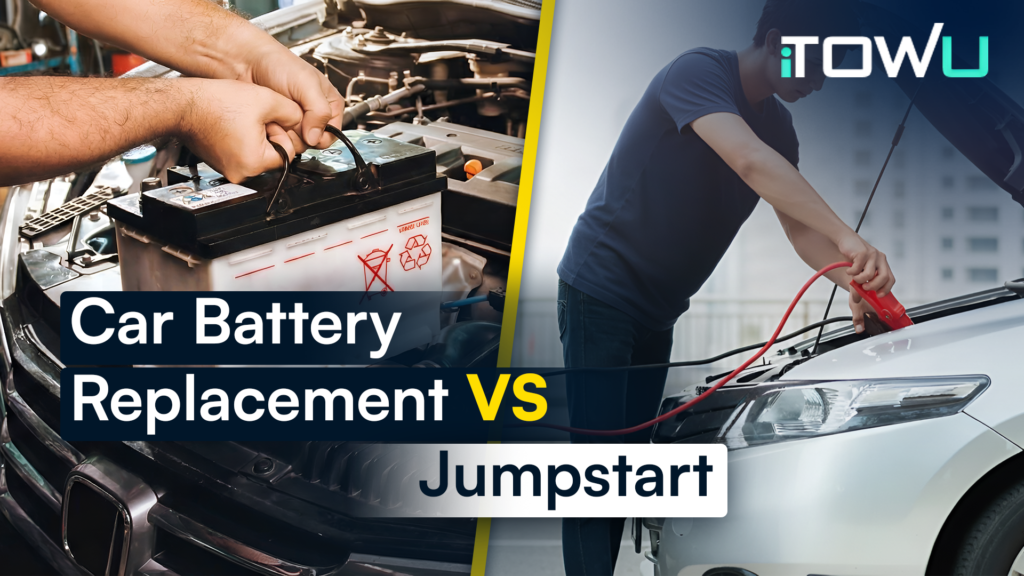
Car Battery Replacement vs Jumpstart: Explained
Car battery jumpstart
A car battery jumpstart is just a quick way to get your car running when the battery is dead. It pulls power from another vehicle or a portable battery pack to give your engine the boost it needs to turn over. Once you’re moving, the alternator takes over and starts recharging the battery as you drive. Just keep in mind that a jumpstart doesn’t actually fix a bad battery; it just gets you back on the road.
Jumpstarts work best when the battery is still in good condition. So, if you need instructions on how to safely do it, then you can check out our article on jump starting a car.
When you might need a jumpstart
Sometimes, a battery isn’t damaged at all; it has simply been drained. In these cases, a jumpstart is often all you need to get back on the road.
A jumpstart might be needed if:
- The headlights or interior lights were left on
- The car hasn’t been driven for several days
- The electronics were used while the engine was off
- The cold weather temporarily reduced battery power
In these situations, the battery is still functional; it has just lost its charge. After a successful jumpstart, a longer drive often allows the alternator to recharge itself fully.
If your car needs a jumpstart but you are not sure about doing it yourself, then you should get help. And the best place to get that help is the iTOWu app. It will connect you with a trusted battery jump service near you.
Car battery replacement
Replacing a car battery simply means swapping out the old, dead unit for a brand-new one. Most batteries last between three and five years. As time goes on, the internal chemicals wear out, and the battery can no longer hold onto a charge. When this happens, jumpstarting may work temporarily, but the problem keeps returning. That’s a clear sign the battery has reached the end of its life. That’s why the only real long-term fix in such a situation is to replace the battery. A new battery restores full power, makes your car more reliable, and keeps you from getting stranded again. You can learn more in our complete guide on how to replace a car battery.
Signs you need a battery replacement
A weak battery usually shows warning signs before it quits for good. If you ignore those warning signs, you’ll likely end up stranded right when you need to be somewhere.
Common signs of a dying battery include:
- Slow engine cranking
- Dim headlights while idling
- Dashboard warning lights for your battery or charging system.
- A swollen or misshapen battery case
- Needing multiple jumpstarts within a short period
For a deeper explanation, read our guide on the signs of a dying battery.
Battery Jumpstart vs Replacement: Differences
Take a look at the table below to see when a simple jumpstart is enough and when you’re better off just getting a new battery.
| Feature | Jumpstart | Battery Replacement |
|---|---|---|
| Purpose | Provides a quick power boost | Installs a new, reliable battery |
| Type of Solution | Temporary fix | Long-term solution |
| Battery Condition | Works only if the battery is still healthy | Resolves weak or failing batteries |
| Time Required | About 5–10 minutes | About 20–30 minutes |
| Cost | Low or sometimes free | Higher upfront cost |
| Durability | Short-term relief | Typically lasts 3–5 years |
| Effect on Old Batteries | Cannot restore worn-out batteries | Fully replaces dead batteries |
| Internal Damage | Will not work if internal damage exists | Corrects internal battery failure |
Car Battery Replacement vs Jumpstart: Which Option is Right for You
What to do if your car won’t start? If it were fine yesterday, then the best bet would be to get a battery jumpstart. But if you had to jumpstart several times recently, or it doesn’t start after a jumpstart, then the battery is likely on its last legs. At that point, jumpstarting it over and over is just delaying the inevitable replacement.
Fortunately, you can request a battery jump start service as well as a battery replacement from the iTOWu app. So, if you are ever in that situation, get the app, request the service, and they will quickly connect you with the nearest professional.
Final Takeaway
Usually, a jumpstart is enough when a battery is drained. But a battery replacement is necessary when it is worn out and can no longer hold a charge. Understanding car battery replacement vs. jumpstart helps you avoid repeat breakdowns and unexpected delays.