
Buying a car is a huge investment. For most people, it’s the second most expensive purchase they’ll ever make. However, once you drive off the lot, your car’s value immediately begins to decline. The best way to slow that process is through regular car maintenance.
However, many drivers often think that oil changes or occasional checkups are enough, but they are not. If you want to keep your car on the road for a long time, then you need to do more than that. While the average car maintenance cost might seem like an extra expense today, it will be a small price to pay compared to the cost of major repairs or part replacements.
Below, you’ll find seven car maintenance tips that go beyond the basics to help keep your vehicle running like new.
7 Affordable Car Maintenance Tips to Save Money Long-Term
Skipping your regular car maintenance often leads to a major spike in your annual repair costs. Maintaining your car is always cheaper in the long run.
The following are the 7 practical car maintenance tips:
1. Follow Your Vehicle’s Service Schedule
You shouldn’t wait for something to break first. The vehicle manufacturer provides a maintenance schedule for a reason. You should stick to the service plan for your vehicle, which could be in terms of time or mileage. For instance, you need to have oil changes every 5000-10000 miles, tire rotation every 6000-10000 miles, and all the inspections/replacements (fluid, filter, plug, brake, etc.) at intervals of 15,000 miles, 30000 miles, 60000 miles, or 100000 miles. Of course, the best practice would be to follow the service plan on your car’s owner’s manual.
2. Check Fluids Beyond Just the Oil
Basic car maintenance often stops at oil changes, but that’s a mistake. Your car also relies on coolant, brake fluid, and transmission fluid to operate properly. If you do DIY car maintenance, then you should also check these levels monthly. Low transmission fluid alone can lead to extremely costly repairs if ignored.
3. Breathe Easy with New Air Filters
When your engine gets clean air, it runs smoother and uses fuel more efficiently. A dirty air filter forces the engine to work harder and burn more fuel, increasing operating costs. So, check your air filters at around 15000 miles or as recommended on the owner’s manual. Also, changing your air filters is one of cheapest and easiest car maintenance tasks you can handle at home.
Quick Note: Need Help on the Road?
Sometimes, even with the best car maintenance or care, breakdowns can still happen. If your car won’t start or stalls unexpectedly, you should use the iTOWu app to get emergency roadside assistance. This app helps you quickly connect with the nearest professional roadside service providers.
4. Maintain Correct Tire Pressure
Tires are pretty expensive, and underinflated tires wear out faster while at the same time reducing fuel efficiency. You should check tire pressure regularly, especially as part of car maintenance before winter, since cold air causes pressure to drop. Proper tire inflation helps prevent blowouts while extending the life of your tires.
5. Listen to Your Brakes
Brakes usually warn you before they fail. If you hear squeaking or feel vibrations when stopping, you should schedule a brake repair service right away. Also, replacing brake pads is cheap, but waiting until grinding starts often means replacing rotors too, which doubles the repair costs.
You can book a brake repair service for your car with the iTOWu app. Just describe your brake need and get instantly connected to the nearest brake repair shop or brake mechanic.
6. Protect Your Battery
Heat and cold are brutal on your vehicle’s battery. So, as part of your DIY car maintenance checklist, look for corrosion on the battery terminals. Cleaning it off helps ensure reliable starts. Also, there are other signs of a weak or dying car battery that you can look out for.
Moreover, if your battery is over three years old, have it tested during your next service. You could also use a multimeter to check the battery’s voltage.
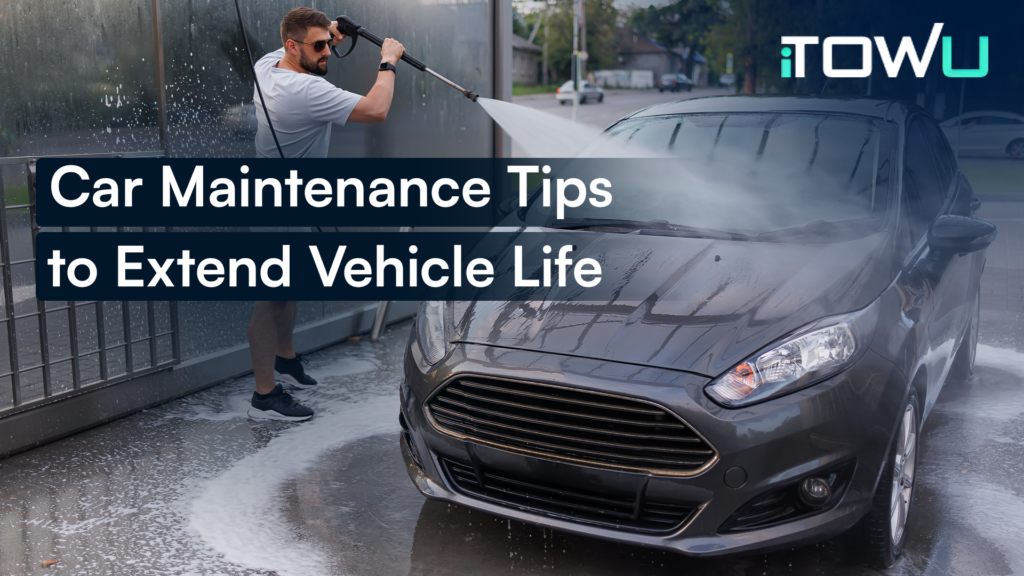
7. Wash your Car Regularly
Most of the earlier tips focused on keeping your vehicle in good shape mechanically. But washing your car helps it to look good, too. Also, regular cleaning helps preserve the paint of your vehicle, which prevents rust. That being said, many drivers often focus only on the exterior of the car. It is just as essential to wash the underside of your vehicle. Debris like dirt, mud, road salt, and grime can build up and cause rust, especially during winter weather.
Last Note
Taking care of your car is one of the best choices you can make as a vehicle owner. These car maintenance tips mentioned above will help keep your vehicle strong, safe, and reliable over time. Habits like regular inspections, oil changes, and on-time repairs prevent seemingly minor issues from turning into expensive problems.