
Your tires are the only part of your car that makes contact with the road. Because of this, the depth of your tread is a huge deal for your safety. Tire tread depth is what determines how well your car can actually grip the pavement, especially when you’re caught in rain or snow.
If the tread wears down, then the traction decreases and stopping distances increase. It often happens before drivers notice any obvious warning signs.
So, how much tread do you really need to stay safe? The answer to this question will help you avoid accidents and extend tire life.
Why Tire Tread Depth Matters
When the sun is out and the roads are dry, you might not even notice your tires are getting smooth. But the second you’re dealing with rain, snow, or slush, those worn-out treads go from “fine” to a serious safety risk in a heartbeat.
When your tires lose those deep grooves, they can’t clear water away anymore. Instead of gripping the pavement, you end up “floating” on a thin layer of water, which is called. hydroplaning. That is terrifying because you suddenly lose the ability to steer or brake. In slippery conditions, especially when using winter or snow tires, tread depth is what allows the tire to bite into snow and ice to maintain traction.
As tread wears down, braking distances increase significantly, and that can be dangerous for you.
Think about it this way: if you’re flying down a wet highway, having thin tread could mean it takes you another 50 to 100 feet just to come to a halt. When you’re out there on the road, that extra distance is often the only thing standing between a close call and a serious wreck.
The Magic Numbers: What’s Safe vs. What’s Legal?
In the US, tire tread depth is measured in 32nds of an inch. Knowing these numbers helps you understand precisely when it’s time to replace your tires.
- New Tire Tread Depth: Most all-season tires start with about 10/32″ to 11/32″ of tread. Winter tires often begin with even deeper tread to better handle snow and slush.
- The Caution Zone (4/32″): This is right where your tires start to lose their edge. You’ll really begin to feel the difference when you try to brake on a wet road, as your stopping power takes a noticeable hit, and most experts will recommend replacing your tires. Especially if you live somewhere that gets a lot of rain or snow.
- The Legal Limit (2/32″): In most U.S. states, 2/32″ is the minimum legal tread depth. Tires at or below this level are considered bald and pose a serious safety risk, greatly increasing the chances of losing traction or control.
How to Check Your Tire Tread Depth
You don’t need an expensive tire tread depth gauge to check your tire grip, although they are affordable and very accurate. In most cases, you already have what you need right in your cup holder.
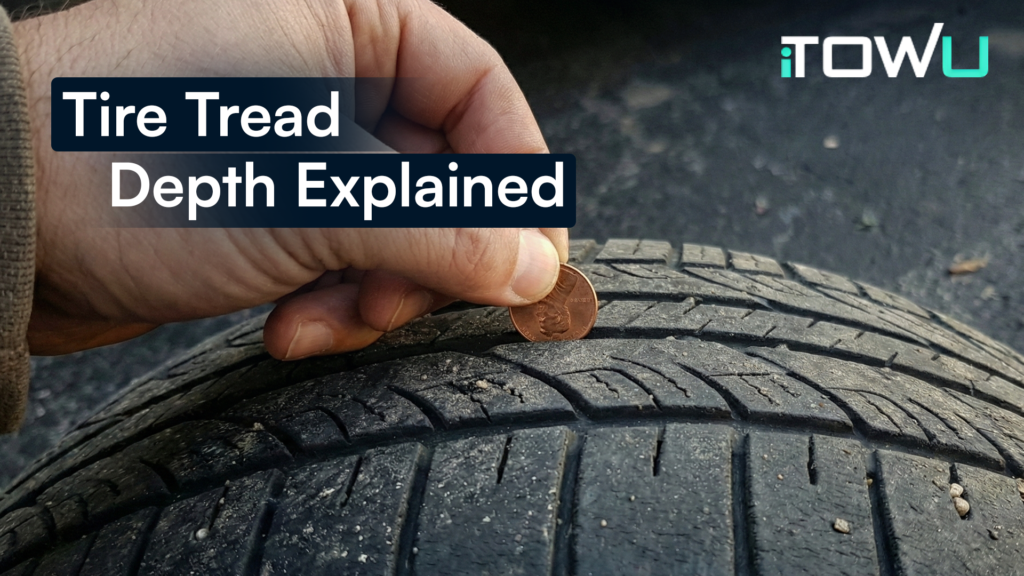
The Penny Test
Take a penny and insert it into a tire groove with Lincoln’s head facing down.
- If the tread covers part of Lincoln’s head, you have more than 2/32″ of tread remaining.
- But, if you can see the top of Lincoln’s head, your tread is at or below the legal limit, and it’s time to replace your tires.
The Quarter Test
For even greater safety, use a quarter. Insert it into the tread groove with Washington’s head facing down.
- If the tread reaches Washington’s head, you have at least 4/32″ of tread left.
- If it doesn’t reach his head, you should start planning for new tires, especially if winter is coming.
Tread Wear Indicator Bars
Look between the main grooves of your tire, and you’ll find small raised bumps known as tread wear indicator bars. These bars are set at exactly 2/32″. When the surrounding tread wears down to the same level as these bars, your tires are officially worn out and need replacement.
7 Signs of Uneven Wear You Should Know
Sometimes a tire looks fine at first glance. But when you look closer, the tread often tells a deeper story. When you see uneven tire wear, it’s basically your car’s way of waving a red flag.
Here are seven clear signs of uneven tire wear and what they typically indicate:
- Wear on both edges- This means your tires are likely underinflated. They’re essentially folding inward, which forces the edges to do all the heavy lifting.
- Wear in the center- This usually happens when tires are overinflated. The extra pressure makes the center bulge out, so it wears down much faster than the rest of the tire.
- Cupping or scalloping- If you see wavy dips or cup-shaped patterns, your shocks or struts are probably worn out and causing the tire to bounce.
- One-sided wear- A strong indicator of improper wheel alignment, causing the tire to drag instead of rolling straight.
- Feathered edges- If the tread feels smooth one way but sharp the other, your alignment is likely off.
- Spotty or patchy wear- This can result from unbalanced tires or worn suspension components.
- Rapid wear on one tire only- May indicate a suspension problem or uneven weight distribution in the vehicle.
Quick Note: If you experience a tire blowout or slide into a ditch, the most important thing is to stay calm. With the iTOWu app, you can quickly request a nearby professional to assist with tire repair or replacement, winching your vehicle out, or arranging a tow, so help reaches you safely and without delay.
Last Note
Think of your tires as your first line of defense. You should at least use one of the three tests mentioned above once a month to check your tire’s tread depth. Also, you should regularly check your tire pressure and wheel alignment. Doing them will help you avoid scary situations like hydroplaning or sliding on icy roads.